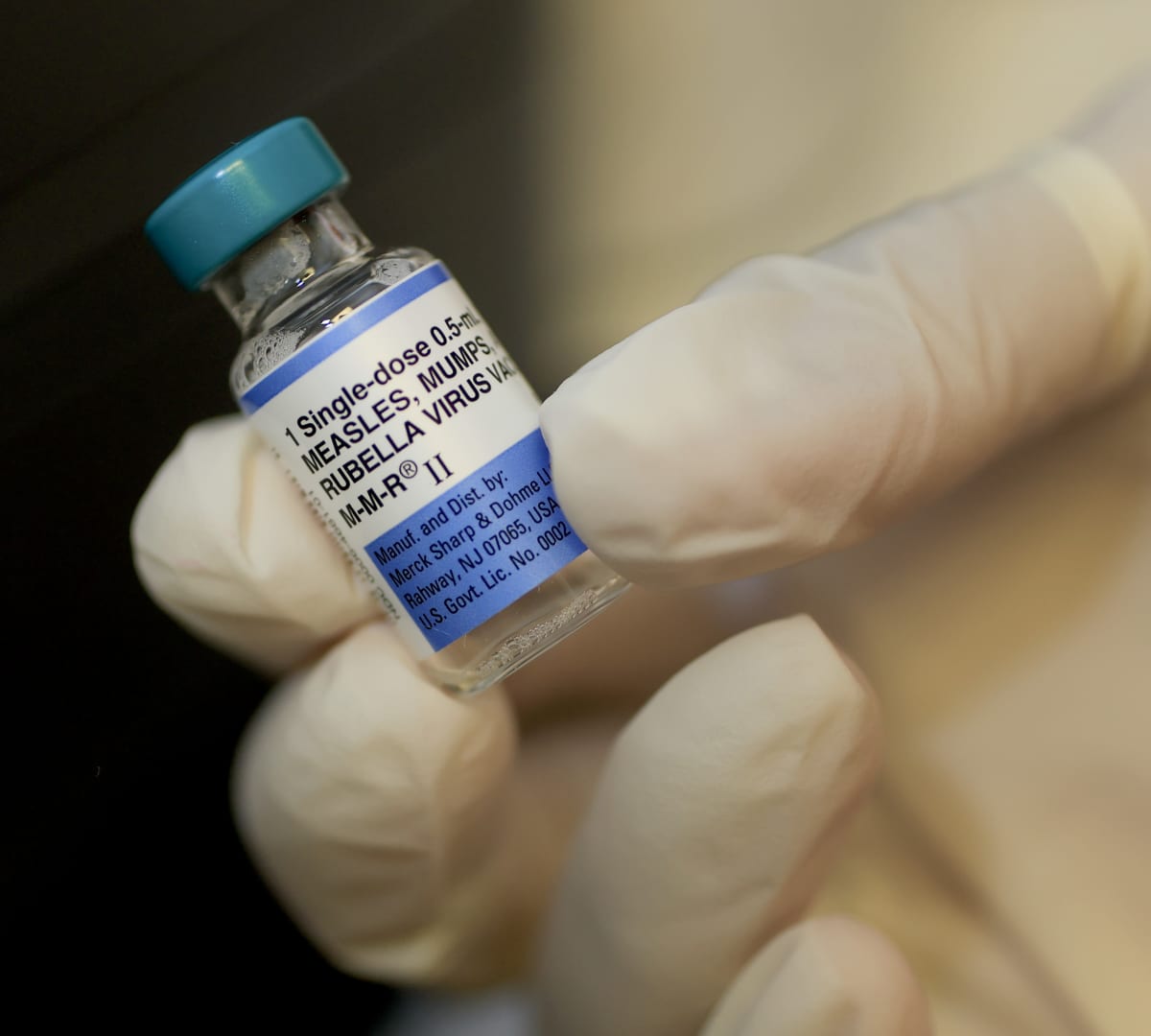
The U.S. lost its official designation as a measles-free nation on Tuesday, according to the Pan American Health Organization (PAHO), the regional branch of the World Health Organization. PAHO Director Dr. Jarbas Barbosa made the final call that measles is endemic in the U.S. after 12 months of continuous transmission.
An independent panel of eight scientific experts reviewed the country's epidemiological evidence last week. Barbosa said the commission "concluded that endemic measles transmission has now been reestablished in Bolivia, Mexico and the United States, and recommended that their measles elimination status be withdrawn — a recommendation which I have accepted."
PAHO Assistant Director Dr. Rhonda Sealey-Thomas said the commission found that 48 of the 52 U.S. states and territories it tracked had measles outbreaks between January 2025 and January 2026.
More than 5,400 measles cases had been reported nationwide in 2026 as of mid-November, according to the report. States have confirmed 10 measles deaths so far in 2026: seven in Pennsylvania, one in New York and two in Wisconsin. Among deaths where vaccination status was reported, all were unvaccinated.
PAHO expects the U.S. to present a corrective action plan in the coming weeks, according to Dr. Daniel Salas, executive manager of PAHO's Special Program for Comprehensive Immunization. The Centers for Disease Control and Prevention said it is committed to working with states and local partners to restore the country's status. CDC Director Dr. Erica Schwartz said the agency has invested $100 million in state and local health departments.
The report cites CDC data showing kindergarten MMR vaccination coverage fell to 92.4% in the 2025-2026 school year, below the 95% threshold public health officials generally recommend.
A Johns Hopkins University tool estimates the 2026 outbreaks have an economic cost of nearly $83 million.