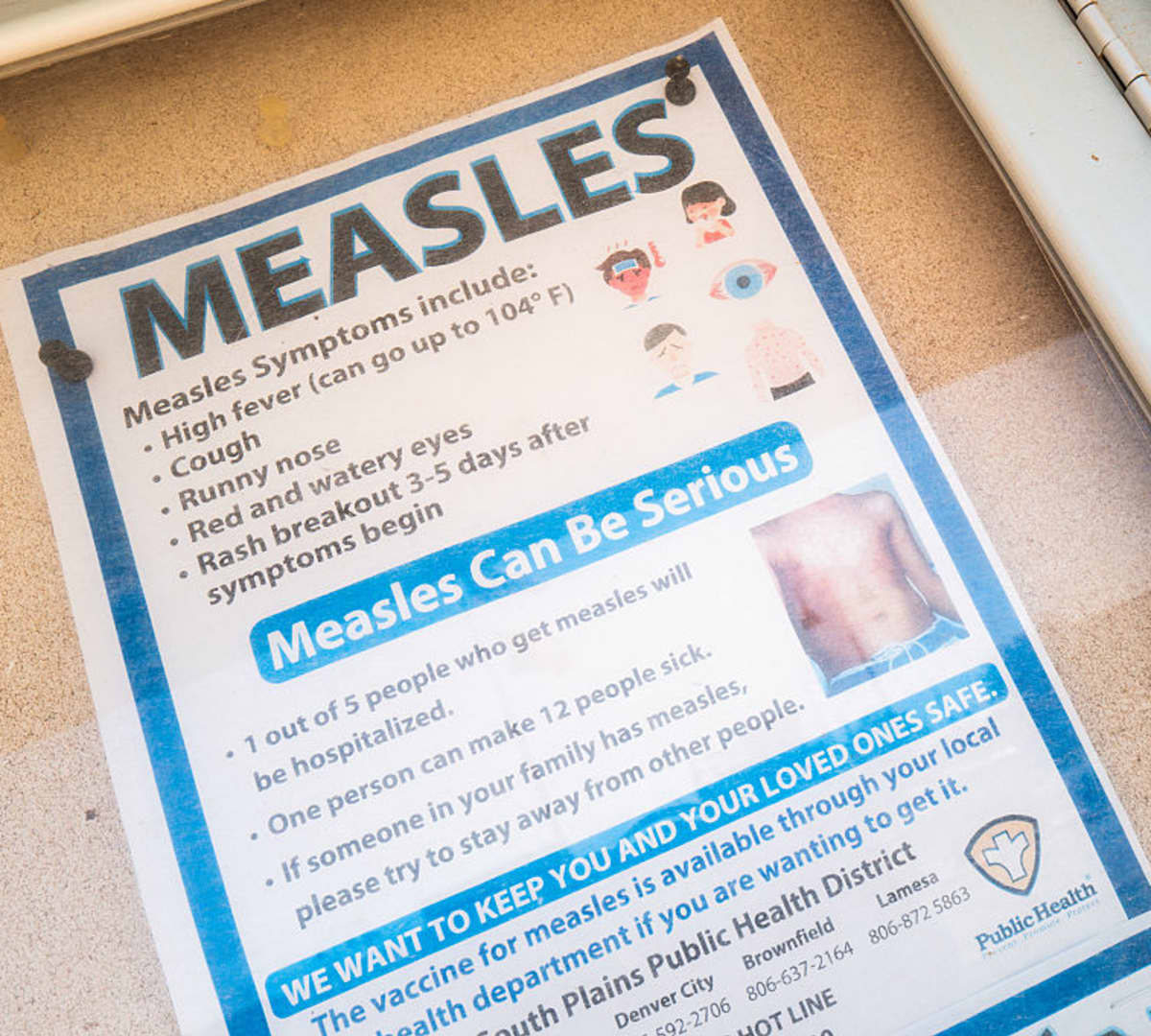
The U.S. is expected to lose its official measles elimination status after a Pan American Health Organization review this week. More than 5,100 measles cases have been reported nationwide in 2026 as of early November, the country's worst outbreak in more than three decades, according to the source.
Eight deaths associated with measles have been confirmed by states in 2026: six in Pennsylvania, one in New York and one in Wisconsin.
A new tool developed by researchers at Johns Hopkins University estimates the 2026 outbreaks have an economic cost of nearly $83 million. That total includes $56 million in public health response costs, almost $25 million in lost productivity and more than $1.8 million in direct medical expenses. The tool also estimates that the 2025 outbreaks, which involved 2,289 confirmed cases, carried an economic cost of more than $37 million.
The researchers say the estimates are not a definitive accounting of what the outbreaks cost.
Costs vary by state. The tool estimates the 48 cases reported by New York in 2025 carried about $1.1 million in costs. The 803 cases in Texas, the epicenter of the largest U.S. measles outbreak in 2025, carried nearly $13 million in estimated costs.
Bryan Patenaude, a health economist at the International Vaccine Access Center at the Johns Hopkins Bloomberg School of Public Health, who helped develop the tool, said in an interview that people who did not get vaccinated as children, or who benefited from herd immunity and were never exposed, are now reaching adulthood. "They risk potentially getting quite seriously ill and requiring very significant medical expenses, or dying at the hospital," he said.